

I have watched a lot of people get waved off by a doctor. I have been waved off myself. So when Tim McDonald told me how to advocate for yourself at the doctor, and then told me what it cost him to learn it, I wrote it down while we were still recording.
Tim was on my show back in May. He came back a few weeks after finding out his cancer had returned, almost six years after the first diagnosis. He could have kept that private. He decided to talk about it instead.
Listen or watch the full episode
Listen on Apple Podcasts:
You can also watch the full episode on my Facebook page, where it plays right in your feed.
What this conversation did to me
I was not sure I could get this one right. Tim was in the middle of something hard, and there is a version of that interview where I make it prettier than it is and everybody feels a little better and nobody is helped.
He did not let that happen. He told me about the week he stopped eating much and did the bare minimum. He said the words out loud without dressing them up.
Then he handed me something I have not been able to put down since. I will get to it below.
Meet Tim McDonald
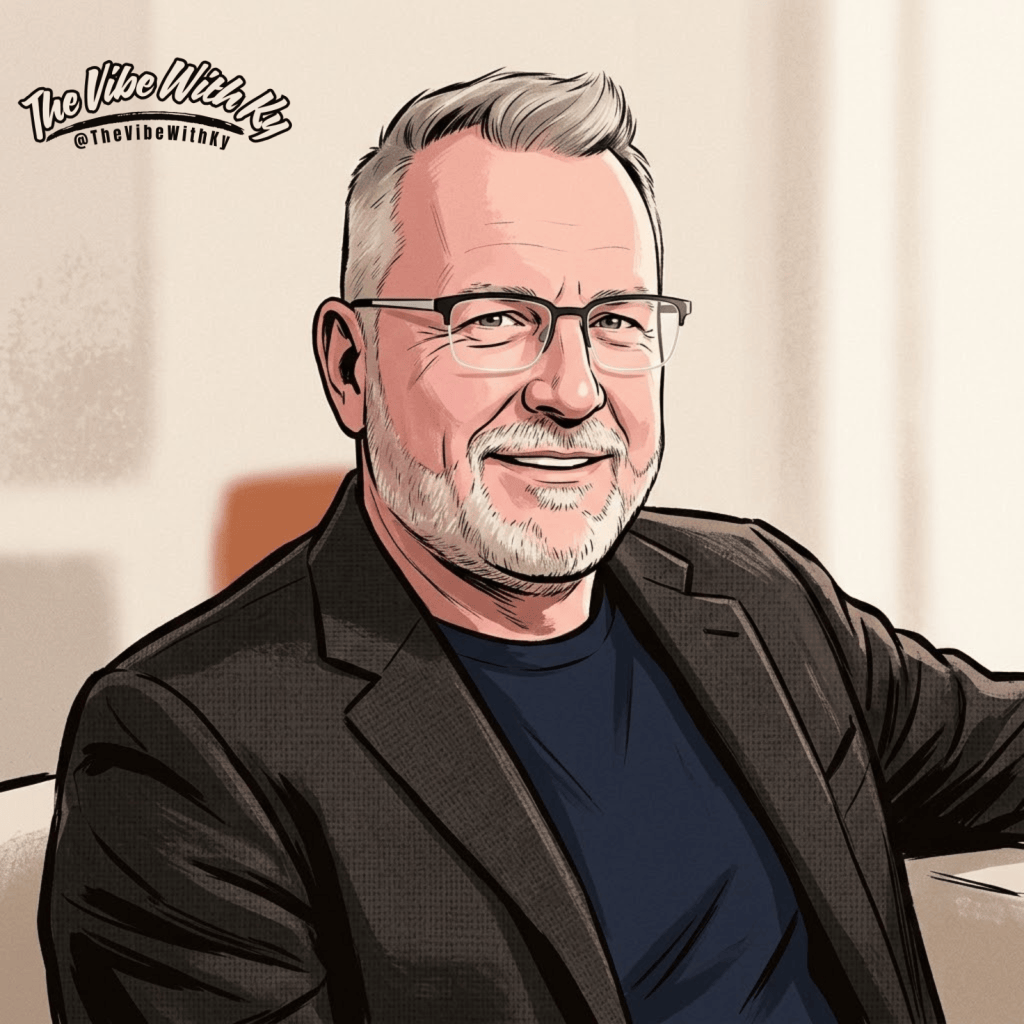
Tim is a patient advocate, a speaker, and an author. He is a stage four colorectal cancer survivor and a living donor liver transplant recipient. He is not a clinician, and he is careful about that line, which is one of the reasons I trust him.
He is a Research Advocate with Fight Colorectal Cancer and the Florida Chapter Leader for Man Up to Cancer. He sits on patient advisory councils. Before all of it, he spent seventeen years in community management, including as Director of Community at HuffPost.
He also built something he calls the General Manager framework, which is his way of describing how a patient can run their own care instead of being run by it.
From Patient to Advocate by Tim McDonald: https://www.amazon.com/dp/B0GL3BQMH6
Find Tim at:
- Website: timmcdonaldadvocate.com
- Advocacy at Work: advocacyatwork.com
- LinkedIn: linkedin.com/in/timamcdonald
- Instagram: instagram.com/timamcdonald
- Facebook: facebook.com/tim.mcdonald
The week he lost, and the question that ended it
Tim got the call between work meetings. He told his wife, closed his laptop, and went for a walk by himself.

He was honest about what the walk did and did not do.
I’m not saying the thoughts left my head, but I think there’s just something about your body moving, being out in fresh air and nature that really is healing.
Then came a week he described in a way I have not heard anybody describe it before.
That first week was like mentally hellacious.
He was not eating much. He was doing the bare minimum. He kept circling back to what he calls the what-if game, which he says he hates.
What ended that week was not a pep talk. It was a question he asked himself.
My life is no different today than it was when I got that call. Everything’s exactly the same. There’s just one little piece of data that I got that is different. That’s it. Nothing has changed.
Sit with that for a second, because it works far outside of cancer. If your burnout came back, or your depression came back after two stable years, the thing that changed is information. Your life, your people, your capability, all of it is where it was last week.
That does not make the news small. It makes it survivable.
How to advocate for yourself at the doctor
This is where the conversation stopped being about cancer, and it is the part I most want you to have.
Tim’s answer starts in a place most of us skip.
You know your body better than any professional doctor does. You know it. And so if they’re not listening or taking you seriously, I would say go find another doctor to talk to.
He is not saying your doctor is the enemy. He made a comparison I liked. You do not call one person to clean your chimney, clean your house, and walk your dog. Doctors specialize too, and sometimes the problem is that you are talking to the wrong one.
So finding the right expert is itself an act of self-advocacy. So is noticing you are being dismissed. So is getting another opinion.
Tim lived this. Nobody handed him a referral. He researched, made his own phone calls, and drove eight hours round trip for a one hour appointment to reach the team he wanted.
His first oncologist gave him the line I wrote down mid-interview.
Get a second, third, fourth, tenth opinion every step along your journey, including with me.
The second half matters as much as the first. You are not shopping until somebody tells you what you want to hear. You are going until you believe what you are hearing.
What about the barriers that are real
I asked, because I know what the comments are going to say. Not everybody can afford another opinion. Not everybody lives near a second option.
Tim did not wave that away.
Yes, there are real barriers out there, but there’s also every barrier has a way to get around it or over it.
He pointed to organizations that help with travel and costs for second opinions, and to virtual visits, which did not exist in this form when he was first diagnosed. His point was not that barriers are imaginary. It was that most of us stop at the first one without checking whether it can be gotten around.
This applies just as directly in mental health care. The same skills work at an ADHD assessment, in a psychiatrist’s office, and with a general practitioner who keeps telling you it is stress.
Why this matters more than it used to
There is a reason Tim spends so much time on screening, and the numbers behind it changed recently.
The American Cancer Society reported in early 2026 that colorectal cancer has become the leading cause of cancer death in men under 50 and the second leading cause in women under 50, and it is the only one of the top five where deaths are still climbing (American Cancer Society).
Screening guidance moved to match. The U.S. Preventive Services Task Force now recommends that adults at average risk begin colorectal cancer screening at 45 rather than 50 (USPSTF).
Tim says roughly two dozen people have gotten screened after hearing him speak, and some of them had polyps removed before anything ever became cancer. That is the whole argument for talking about this out loud.
What hope actually looked like to him
I did not want the poster version, so I asked what hope looks like on an ordinary day.
A lot of us say that we have hope, but hope needs to be grounded in belief. Because if you honestly don’t believe in the hope that you have, it’s just an empty four letter word.
I am still thinking about that one.
Key takeaways
- A setback is information, not a verdict. Ask what has actually changed. Usually the answer is one thing, and everything else about your life is where you left it.
- You are allowed a bad week. Tim had one, called it what it was, and did not treat it as a personal failure.
- Finding the right expert is self-advocacy. So is noticing you are being dismissed, and so is asking for another opinion.
- Go until you believe what you are hearing. Not until you hear what you want.
People also ask
How do I advocate for myself at the doctor?
Start by treating what you notice in your own body as real information, because you live in it and your doctor does not. Say plainly what you are experiencing and what you want to happen next. If you are not being taken seriously, ask for a referral to a specialist or seek a second opinion, and keep going until the answer makes sense to you.
What do I do if my doctor is not listening to me?
Say directly that you do not feel heard and ask what would need to be true for the concern to be investigated. If that goes nowhere, find another doctor, ideally one who specializes in what you are dealing with. Being dismissed once is not evidence that you were wrong.
How do I ask for a second opinion without offending my doctor?
You do not need permission and you do not owe an apology. Most doctors expect it, and Tim’s own first oncologist actively encouraged it, including about his own advice. A simple “I would like a second opinion before we decide” is enough.
Is it normal to fall apart after bad news?
Yes. Tim described his first week as mentally hellacious, and he is someone with almost six years of practice at this. Give yourself some grace, in his words, and then start asking what you can actually do with the information.
Before you go
The thing I keep coming back to is that Tim did not talk himself out of the bad week. He let it happen, and then he asked one question that gave him somewhere to go.
If something you thought you had put down has come back on you, whatever your version of that is, you are not starting from zero. You built it once. You still know how.
If you want more of Tim, his book is From Patient to Advocate and his work lives at timmcdonaldadvocate.com.
If this one hit close to home today, the Mental Health Resources Hub is here for you.
New to the show? Start with the podcast page, and if you want more of Tim specifically, his first appearance was You Are Not Your Diagnosis.
Follow me @thevibewithky wherever you spend your time.
Tim McDonald is a patient advocate and author speaking from lived experience. He is not a clinician, and I am not a mental health professional. This post is for education and support, and it is not medical advice or a substitute for care from a qualified professional.
Much love. Good vibes. – Ky
Full transcript
Here is the full conversation, start to finish, if you would rather read it than listen.
Read the full transcript
Tim McDonald (00:00)
hope needs to be grounded in BELIEF. Because if you honestly don’t believe in the hope that you have,
it’s just an empty four letter word.
Kyrus Keenan Westcott (00:07)
Hey everybody, welcome to The Vibe With Ky Podcast, the show where we have honest conversations about mental health and the craziness of being a human in today’s world. I’m Ky, and I’m really happy that you’re here with me today. I want to start with something that we don’t talk enough about, and that is a thing called the second time around. That’s when you did the work, you rebuilt, you got
Back on your feet from whatever you were struggling with, and you finally exhaled. What nobody preps you for is that thing coming back, the burnout that returns after your best stretch in years, the worry that you genuinely put down showing up again like it kept a key to your house. And your brain tells you the piece that you built must have been fake.
That is exactly where my guest today is sitting right now. Tim McDonald is a patient advocate, a speaker, and the author of the book called From Patient to Advocate. Tim is a stage four colorectal cancer survivor and a liver transplant recipient. He’s also a research advocate with Fight Colorectal Cancer and the Florida chapter leader for Man Up To Cancer.
He was on my show back in May of this year. A few weeks before we recorded the episode that you’re about to watch or listen to right now, he learned that his cancer was back. And he wanted to have a conversation. And that’s what that conversation is all about in today’s episode. So let’s talk about what we get into today. in today’s episode, Tim explains in his own words what he was told and why there is nothing to treat yet with his cancer being back.
he also tells us about the truth, you know, about that first week after learning that his cancer was back. he calls that first week, you know, he calls that mentally hellacious. and he also makes a case about hope that I have not stopped thinking about. And I want to share that with all of you today. What stayed with me in this episode was watching him work through all of this stuff.
In real time and then still showing up to help other people and to share his stories, he just makes it look like a decision and not just a personality trait. Like Tim is a very, very good person. I’m so happy to have him back on the show to talk about this and to share his journey with everybody listening. So with that said, my friends, sit back, relax, and enjoy my chats with my friend, Tim McDonald.
Kyrus Keenan Westcott (02:29)
I am sitting here with my friend Tim McDonald. Nice to see you again, my friend.
Tim McDonald (02:34)
It’s great to be here. Ky, thank you so much
Kyrus Keenan Westcott (02:36)
Yeah.
Tim McDonald (02:36)
for having me back on. I know it wasn’t as great a timing as it was last time, but we’ll get through it.
Kyrus Keenan Westcott (02:43)
Yeah,
absolutely. And we’re gonna talk about that today. before we get into anything, I I wanna say two things out loud and and on the record. everything, you know, that we that we, you know, talked about before, you know,
It take it takes so much courage to do what you’re doing today. And I just want to make sure that it’s clear from the jump how thankful I am that you feel safe enough with me to share, you know, this moment and and to talk about everything and and all of that. And to everybody listening, I I always want people to know I am not a clinician, nor do I pretend to be. So everything that we talk about medically today, you know, will will come straight from from from Tim.
Tim’s expertise and insight and experience here. So Tim, it’s really, really good to see you. when we talked back in, I think it was May, I want to say. We talked back in May. and the episode that we did was called You Are Not Your Diagnosis. And the people that watched and listened to the episode, they they kept writing in to me. what they said was what they kept writing in about was that you refused to make any of it previously.
Than it was. Since then, I I have spent time on your site, and it opens up your site opens up with a question that I have not been able to put down. What if your worst moment became your most important one? You talk about you know patients becoming you know the general managers of their own care. So for the person listening, you know, that’s meeting you for the first time right now.
Catches up. How do you how do you describe what is happening? What do you know? What is going on in your own words?
Tim McDonald (04:23)
Yeah. So talking specifically about what’s happening in the last month, right? well,
Kyrus Keenan Westcott (04:27)
Mm-hmm. Yeah, yeah.
Tim McDonald (04:29)
as a stage four colorectal cancer survivor, obviously the worst time was almost six years ago hearing you have cancer. The second worst time is when you hear you have a positive CT DNA test, which is a circulating tumor DNA test, which measures for cancer cells in your bloodstream.
So positive means that they are present. Negative means that they aren’t. I’ve had negative ones for three years until I hit my three year mark. Then I got a positive one. And so that is what is happening right now. the unfortunate part of this is there’s no treatment for it because all they know is there’s cancer cells in your blood. They don’t know where it is, so they don’t know what they’re treating.
So they can’t do any treatment. So I am sitting here on this news, just you know, trying to process and deal with it the best I can.
Kyrus Keenan Westcott (05:23)
Yeah, yeah. I remember when we last talked, I remember when I believe when you first got your diagnosis, you were talking about coming home and just saying to your wife, like, hey, I’ll tell you in the car what’s happening, just like just get in the car, let’s let’s go. What was it what was it like this time when when when you got this news? Was it a similar experience or was it like how did you feel now in comparison to the last time?
Tim McDonald (05:51)
I you know, in all honesty, I really it brought me back to as I was thinking about this before we got on, Ky, it brought me back to when I got a call that my dad had died when he was fifty f right before he turned fifty-five. And I was at work and I got the call from my sister telling me and I just hung up. I didn’t know what to feel or think.
And I just went into my boss and told him and he goes, Well, go home. And I’m No, no, no, no. I’m fine. I’m just want to work. And then I started working and I just couldn’t process or do anything. And I went back into his office about 45 minutes later and said, I think you’re right. I need to do go home. So I do I went home and I just really kind of let it all out and, you know, just didn’t know what to feel or think. But I just kind of felt everything. And I think when I heard when I got off with my
physician’s assistant, PA as we call him, who works with my oncologist who told me this on the phone. I was just like, okay. But then the rest of the day, I just couldn’t process anything. And then the next day I woke up and I was like, what am I, you know, all my mind kept doing was going back to, I don’t want to be back on chemo every two weeks. I don’t want to do this. I don’t want to do that. And I was really kind of feeling depressed for about a week.
And didn’t really have too much, you know, get up and go, too much enthusiasm for anything. I was just like kind of going through the motions, so to speak, I guess, more than anything. getting to done what I needed to get done, and that was about it. You know, not with the enthusiasm that I usually have, not with not doing extra stuff like I usually do, just the bare minimum just getting by. And
think it took me about a week. But then I started thinking to myself, I’m like, Tim, you dealt the diagnosis so well. You’ve learned so much through this, you know, these almost six years now.
Why are you getting so hung up on hearing this news right now? And I started thinking to myself
You know, because I don’t think my wife took this like she took the other stuff. She was like much more calm about it than I was. At least that’s how she presented herself. But I just finally had a talk with myself. and I know most you probably understand this, and most of your listeners do too. Like, you know, I always say I got voices in my head, and I did I do.
Kyrus Keenan Westcott (08:10)
Mm-hmm. Sure. Yeah.
Tim McDonald (08:12)
but I was talking to myself and just really
kind of understanding the fact that, you know, my belief in life is it’s not what happens to us, it’s how we react to it. And why was I reacting the way that I was right this moment when I have control over how I react to things. I don’t have control over what I was told, only how I react to it. And I started processing that and thinking about it. Now I’m trying, I’m putting this in words so it’s going to sound a lot easier than it actually was, but I I started thinking about it and really
Understanding that, you know what? My life is no different today than it was when I got that call. Everything’s exactly the same. There’s just one little piece of data that I got that is different. That’s it. Nothing has changed. So why am I changing how I think and how I’m processing things and how I feel when everything else is the same? Except for this one little piece of data that I have. And
I think understanding that kind of put it in a new context for me. That this wasn’t life changing. It was just news is all it was. And I just I really from that point forward started embracing the fact that, okay, I don’t know too much about this, right? Like these these CT DNA tests that I talked about that got me, there’s several different types of them. They’re pretty new in the marketplace, like only about, you know.
four or five years old in the marketplace. you know, and they’re still coming out with new ones and improving. So it’s like oncologists don’t even know, you know, some oncologists don’t even know what to do with them yet. And different
Kyrus Keenan Westcott (09:48)
Yeah.
Tim McDonald (09:48)
ones are using it different ways. So just to give you an idea of the landscape and the medical profession, it’s not something that everybody has a protocol for that’s the same. And I’m sitting there thinking, I’m like, if this is so new, I don’t really have anybody to turn to yet. You know, I mean, there’s a lot of different sources of information out there.
But let me just start educating myself on what this actually means. And especially with the certain tests that I got. and that led me to doing some research on who should I talk to, right? Because my oncologist, I say, is great. I’m not leaving them behind. But I was the one who brought a liver transplant to him. And I was the one who brought this this CT DNA test to him. He didn’t present it to me.
And I was the first ever transplant patient that they’ve had at the cancer center that I go to. And it’s a major cancer center, right? And I was not necessarily the first, but probably among his first patients who are getting this this you know CT DNA test done. So for me, I’m like, he’s not the one that I should be asking all these questions to because I’m educating him on stuff.
He’s not educating me on these particular components. He was great at getting me to, you know, where I needed to be for my liver transplant, but he’s not great at helping me answer my questions about what’s happening with me right now with this test. And so I found two programs, one at Mayo Clinic up in Jacksonville, Florida, because they do transplants there. And they have an oncology team. And their oncology team works very closely with their transplant team.
If you ask me how I knew this, it’s because I’m kind of a geek when it comes to liver transplants for colorectal cancer
Kyrus Keenan Westcott (11:27)
Sure.
Tim McDonald (11:28)
patients and I pay attention to what’s happening in the world. And last
Kyrus Keenan Westcott (11:30)
Sure. Yeah.
Tim McDonald (11:31)
summer I got to meet one of the oncologists who spoke at a National Comprehensive Cancer Network conference in Orlando. And I went up and talked to him after he’s talked because his case study was on a person who he had that went into the transplant program. So obviously I was kind of interested in it and I wanted to talk
to
Kyrus Keenan Westcott (11:48)
Mm-hmm.
Tim McDonald (11:48)
him.
So I understood from that conversation how closely their oncology team worked with the transplant team. So that was number one. I wanted to talk to them. Number two was I had learned that MD Anderson and there’s some other ones too, are doing amazing work because when you are in this state, you know, like when you get to no evidence of disease or remission, and you get a positive CT DNA test, but your scans are clear.
They can’t, you know, like I said, you’re kind of in this limbo of wait and see world because they can’t treat anything, right? there’s nothing to treat. However, there are some places that are doing, and they call that MRD, which is minimal residual disease. So that’s what’s showing up in your blood, but not in an actual tumor yet. And there are some clinical trials out there, and MD Anderson is leading a big one. And so that was the other place that I wanted to call and follow up with. So I just started doing the research.
I I did my investigation and then I made phone calls and I
Kyrus Keenan Westcott (12:48)
Mm-hmm.
Tim McDonald (12:48)
started talking to people. I started educating. I started going out into some of the support groups that I belong to, asking questions about it. Now I’m kind of a unique case because I am a transplant recipient and most people
Kyrus Keenan Westcott (12:59)
Mm-hmm.
Tim McDonald (12:59)
in the colorectal cancer space aren’t. So a lot of the people giving me advice are not giving me advice that is applicable to me, even though they’re doing their best to try and help me. But I’m understanding that I am a unique case. So I need to take everything with a filter.
That I don’t take what they’re saying verbatim, because that might work for them and for many other colorectal cancer patients, but it’s not going to work for me. So I needed to find the sources of truth that I could go to. And I’m not done going through this process yet, by the way. I’m still going through it right now. Like just last night when we we got back, we went up to Mayo Clinic in Jacksonville yesterday. It’s four hours drive each way. So eight hours for a one hour appointment. and it was very educating.
Very informative. I came away walking more empowered, feeling a lot more confident, a lot better. But I know that there’s still more research for me to do. And, you know, one of them is going to be actually talking with the company that makes this blood test that I took and asking them specific questions now, based upon my visit yesterday. Like, is it picking up this dermion germline mutation I have of a BROCA 2 gene in my system? Is it because I’m a transplant patient? I know theoretically the
They have bare, you know, you know, margins in there built in. So you they don’t show you positive if it’s coming from your liver, you know, that’s a foreign object in your body shedding DNA that might show up as as cancer. all these things. And I don’t know all the details and and sp you know, scientific reasoning for all this, but I know that those are a couple elements that are present. And also, my oncologist actually ordered a retest because they want it was so low they wanted to make sure that.
It wasn’t a false positive the first one. So they ran it again, but the number was even lower the second time when they retested it. And so even though it was still positive, it was, you know, they figured, okay, it’s, you know, it’s not a false positive because we did two tests. So I want to call the the manufacturer of the blood test and actually get more information, see if they’ll give me more information, right? Because you don’t know sometimes if they will, if you’re not a practitioner. But that’s like the next step for me to try and do this week is reach out to them and just
keep educating myself. But the the long and the short of this is it’s kind of a wait and see game. You know, I got my next scans coming up the end of September. And then I got another set in November. And we’ll run this the CT scan from my my basically the base of my neck all the way down to my pelvis. We’ll run that. We’ll run the blood test, you know, the CT DNA test again, both times. So we’ll have all the information. It could be I go for the next scans and the next C D DNA test and
It’s negative next time. We don’t know. I’m not guessing that’s gonna be the case. but we just don’t know. But I’m just looking at this as an opportunity to educate myself, empower myself, and help educate others that might be going through something like this.
Kyrus Keenan Westcott (15:51)
Yeah. You you you wrote something called the from patient to advocate and you’ve been you’ve been playing that the point of of it is not the ribbon or the repost. It’s moving past performative advocacy into the kind that gets people better medical care and better mental health care.
And you have a line in your writing that I haven’t stopped thinking about. You said, the diagnosis, the loss, the phone call that rewired your life, right? For the person that’s listening or watching right now, who has probably lived their own version of what you have experienced with that with that phone call.
What would you say to them right now as they as they start to process things or have maybe have have have had struggle struggles processing? Because it from the the feel that I get, you have done an excellent, admirable job at processing a lot of this in a healthy way that keeps you moving forward. And I know there’s a lot of people that feel like they can’t do that. For anybody that has received their own version of that phone call or that experience with their doctor, what would you say to them right now?
Tim McDonald (16:59)
Yeah, I think, you know, the biggest thing I always tell people is, you know, give yourself some grace, right? Don’t get hard on yourself for feeling this way. it’s natural to feel this way. It’s there’s nothing wrong with feeling that way. It’s it’s human, right? I mean, that’s what we all are as human. but I also think, you know, after they kind of get back past that initial shock of it, it’s really kind of
Asking them if they can take a step back almost outside of their body, right? And look at this from a neutral standpoint. Like you’re not going through all the emotions now. So you’re just looking at yourself, going through the emotions. Ask yourself, what are you seeing? You know, did something really change or not? You know, what are you going to be able to do about that?
Now that you have the if you if this information did happen, what are you going to be able to do with that information? Right. And how can you actually take advantage of now knowing something and doing something about it? And then the third step would be what actions will help you kind of work through this so that you’re you’re feeling that more empowered instead of helpless feeling that you have?
And I think that’s, you know, I always say like, you know, the wound, you know, for me, the wound becomes the wisdom, the wisdom becomes the work, right? And so, you know, this is their wound. What wisdom can they take from it?
Kyrus Keenan Westcott (18:21)
Yeah. You’ve been you’ve you’ve you’ve you’ve
Tim McDonald (18:21)
That’s that’s it.
Kyrus Keenan Westcott (18:24)
been you’ve been very open, again, admirably so, you know, that since you’ve gotten the new not just just recently, but originally as well, that since you gotten the news you’ve had your good days and not so good days. and that the worry you genuinely let go of found its way back.
And the last time that you were here, what landed the hardest was that you would not dress anything up. And I and if you feel comfortable enough, I would love to continue to go down that route because I I think people would love to hear it.
Walk me through a a a bad night or a bad day, you know, when cause you have this strength about you. And I like I’m pretty sure it’s not twenty-four-seven, I would imagine, right? Like w walk me through a a day that’s not so great and what you do to bring yourself out of it as you continue to process all of this.
Tim McDonald (19:17)
Yeah,
that first week when I got this call, I remember cause I was up at right where I’m sitting right now talking to you. I had
Kyrus Keenan Westcott (19:26)
Yeah.
Tim McDonald (19:26)
just gotten off of a a work call and I got the call from my oncologist and I was just like, Okay, and I just kinda went on with my the rest of my meetings and then
I usually do a lot of work outside living in Tampa just because I love being outside. And so I got out back, and I think that’s when it all kind of started setting setting in on me. And I knew I had a bunch of stuff to do for work, but I had no more meetings that day. And I just remember just being on my computer. And I think my wife had gotten home from work at that time, and she was out there. So I had told her, and we were talking, and you know.
She’s like, Well, there’s nothing we can do right now, right? You just need to wait and see. And ’cause she knows from what I’ve told her, you know, and and so she’s she’s pretty informed now, much more both of us are much more informed than we were the first time I got cancer. but you know, it was really just, you know, I told her, I’m like, you know, I think I just need to close my computer right now and go for a walk. You know, by my and she goes, You want me to come? And I’m like, No, I wanna do it by myself, you know.
and I just went out and I walked for about 20 minutes, a half an hour. I came back and I felt so much better just because it I’m not saying the thoughts left my head, but it I think there’s just something about your body moving, being out in fresh air and nature that really is healing. And
Kyrus Keenan Westcott (20:49)
Mm-hmm. I agree.
Tim McDonald (20:50)
and and so I just did that. I came back, I opened back up my computer and I looked at it for a little bit.
I think I had one little task I needed to get done before my day, you know, before I could call it a day. And it was
Kyrus Keenan Westcott (21:02)
Yeah.
Tim McDonald (21:02)
this is like at two o’clock in the afternoon, right? And I did that. I messaged my boss and I told her what had happened. And I said, I think I just need the rest of the day off if that’s okay. And she goes, Tim, we are here for you. You take whatever time you need off. And so I just I gave I just finished that day. I went inside.
I think I felt sorry for my cou myself on the couch, you know, just all afternoon,
Kyrus Keenan Westcott (21:27)
Sure. Mm-hmm.
Tim McDonald (21:28)
all evening. I think going to sleep. I am Ky, I am a big believer that sleep is a good healer too.
Kyrus Keenan Westcott (21:36)
Yeah.
Tim McDonald (21:36)
And I I, you know, I worked at Huff Post when Ariana Huffington was still there. And she was she had just written her book about sleep and everything. That was her big thing back when I was working there. And I actually like
I was the type of person who got like three, four hours of sleep each night, you know, and you know, go to bed like at, you know, one o’clock in the morning, get up at four, get
Kyrus Keenan Westcott (21:57)
Yeah.
Tim McDonald (21:58)
on the bus, head down to the city, you know, all this stuff. And I’m like,
Kyrus Keenan Westcott (22:00)
Yeah. yeah.
Tim McDonald (22:02)
and I’m like, I read her book and and the whole thing about it was, you know, that you should get seven to eight hours of sleep a night. But for me, it was it was it wasn’t just getting the seven to eight hours of sleep a night. It was just how you incrementally get to that point.
Kyrus Keenan Westcott (22:16)
Mm.
Tim McDonald (22:16)
It’s not
about taking the jump from three to four hours to seven to eight. It’s about trying to get 10 more hours of sleep each week and
Kyrus Keenan Westcott (22:24)
Mm.
Tim McDonald (22:25)
adding that up. And soon I was getting like six hours of sleep, which wasn’t seven or eight, but it was six. And I wasn’t going to beat myself up because who made up that seven to eight? Somebody else did. Who made up the, you know, that I should be there? Me,
Kyrus Keenan Westcott (22:38)
Mm-hmm.
Tim McDonald (22:39)
right? I did, you know, that there’s no rule
that says you need to do
Kyrus Keenan Westcott (22:41)
Yeah.
Tim McDonald (22:42)
this, right? But I found.
I was so much better mentally and I was sleeping so much better. And I think when I go to sleep now, one of the things that people always ask, you know, a typical question that you get asked is what keeps you up at night, right? And I’ve for many years I’ve been able to answer nothing. I mean, and I mean that honestly. Nothing keeps me up at
Kyrus Keenan Westcott (23:00)
Mm. Yeah.
Tim McDonald (23:03)
night. But I think that that practice of trying to get those extra couple of minutes of sleep really helped do that.
I also don’t kind of focus on, I try not to take a whole lot of calls or if somebody calls me at 8:30 at night, I don’t take it. I don’t want my brain racing in a whole bunch of different directions because I’m talking to somebody late at night.
Kyrus Keenan Westcott (23:20)
Yeah. Yes.
Tim McDonald (23:23)
if I come home from being out late, later than I usually am, I need to sit and just decompress for like a good hour before I go to bed.
Kyrus Keenan Westcott (23:29)
Mm-hmm.
Tim McDonald (23:31)
because if I go straight to bed, even though I’m exhausted, I’m just gonna have all these thoughts going ahead in my head and I’m not actually sleeping. I’m just laying in bed.
letting my head go wild, right? And so it’s all
Kyrus Keenan Westcott (23:38)
Right. Mm-hmm.
Tim McDonald (23:41)
about like just decompressing for that at least an hour before I go to sleep. And when I went to sleep that night, I just remember feeling like, okay, I’m letting go of all this. I’m going to sleep now. Cause I bed is kind of my sacred time. You know, it’s like I don’t let
Kyrus Keenan Westcott (23:55)
Mm-hmm.
Tim McDonald (23:56)
thoughts come in there. I mean, I’m not saying I’m perfect at it, but I mean I I do try and practice that. It’s just like my phone doesn’t come into the bedroom. My thoughts don’t come into my bedroom either. And
Kyrus Keenan Westcott (24:04)
Mm-hmm. Sure.
Tim McDonald (24:06)
they kind of stay outside the door. And so when I went to bed that night and I woke up the next morning, I remember telling my wife, I just feel so much better today than I did yesterday. But like I mentioned earlier, that first week was was like mentally hellacious. I mean, it
Kyrus Keenan Westcott (24:23)
Yeah.
Tim McDonald (24:23)
was like every I started off strong each day, and then as the day went on, I just kept it kept coming back in my mind, you know, like
Kyrus Keenan Westcott (24:31)
Yeah.
Tim McDonald (24:31)
This
is gonna happen. This I don’t wanna go back here. I don’t wanna do this. And and you know, it wasn’t until like that that week where I started saying, you know, I know I think we talked about this a little bit when on the you know the first episode. It was, you know, I I viewed having my cancer as a gift. It taught me so many amazing
Kyrus Keenan Westcott (24:46)
Yeah.
Tim McDonald (24:47)
things, right? And one of the things it taught me was the only thing I really needed to focus on was getting healthy again.
Kyrus Keenan Westcott (24:54)
Yes.
Tim McDonald (24:55)
And
I think that, you know, I started asking myself after about a week, like, what why why did I lose that? You know,
Kyrus Keenan Westcott (25:02)
Yeah.
Tim McDonald (25:02)
why did I lose that opportunity that I had back then when I had cancer? About I just want to be healthy again. That’s what you need to focus on. And so at that moment when I said, I want to become healthy again. And then I my next question was, okay, how are we going to do this? And that led to the education and empowerment piece of of what I was talking about. But
But honestly, though that first week, every day was about like just being so unmotivated and so depressed and so down. you know, my wife would ask what I wanted for dinner, and I’m like, I don’t even feel like eating, you know? And, you know, then
Kyrus Keenan Westcott (25:38)
Yeah, yeah.
Tim McDonald (25:40)
she’d, you know, or she’d, you know, get home from work and what do you have for lunch? And I’m like, nothing. And she’s like, What do you want for dinner? And I’m like, probably just a snack or something. I’m not hungry. And so I wasn’t eating.
I you know, I I I wasn’t being productive. I wasn’t working. I had kind of did a little bit of writing, but I kind of slipped on some of my podcasts that I was running for my advocacy show. And it
Kyrus Keenan Westcott (26:01)
Mm-hmm. Sure.
Tim McDonald (26:03)
was just like, you know, I was just doing the absolute bare minimum.
Kyrus Keenan Westcott (26:07)
The bare minimum.
Tim McDonald (26:09)
Bare minimum. But every other moment in my head was just like consumed with a lack of nothing or
Going back to what ifs and I hate playing the what if game. I hate it.
Kyrus Keenan Westcott (26:22)
Yeah. Mm-hmm.
I get it. I get it. I wanna I wanna throw some numbers your way. some of which I I wrote on my own and some that I that you’ve talked about as well. I was doing some research on this, and the American Cancer Society now reports that colorectal cancer is is the leading cause of of cancer death in men under fifty, and the second leading cause cause in women under fifty.
This and the screening for for people at average risk now starts at 45 and not 50. You have said that roughly two dozen people got screened after hearing you speak, and some of them had polyps removed before anything ever became cancer, which is fantastic. For the person that’s in their 40s right now, that’s listening.
who may have not made those appointments on their own for whatever reason? What actually will move a person from I will get around to it to actually sitting there in the waiting room getting it done? What will it take?
Tim McDonald (27:27)
That is a good question. There’s actually a lot of research being done on believe it or not, clinical trials aren’t just all for drugs and and equipment. They’re also
Kyrus Keenan Westcott (27:35)
Mm-hmm.
Tim McDonald (27:36)
for things like this. Like, how do we get more
Kyrus Keenan Westcott (27:37)
Mm-hmm.
Tim McDonald (27:38)
people screened when they’re supposed to get screened? Right. And
Kyrus Keenan Westcott (27:40)
Mm-hmm. Yeah.
Tim McDonald (27:42)
so there’s a lot of research going on on this. But, you know, one of the most interesting things I heard, Ky, and this is goes back several years ago, was a retired congressman from the Pittsburgh area in Pennsylvania. He was at Call on Congress that we were doing for
For a colorectal cancer awareness month up in March. And he’s with a think tank now. But what they do is they focus on how we can effectively communicate with populations of people to get the message across that empowers them to take action. And when he was talking about colorectal cancer, he he specifically said for African American men, the one thing
Kyrus Keenan Westcott (28:17)
Mm-hmm.
Tim McDonald (28:17)
that he found was, you know, you can say to a white man, you know.
Don’t you see your you want to grow up and see your daughter get married. But to an African American man, just changing that language a little bit and saying, Don’t you want to be able to walk your daughter down the aisle makes all the difference in the world? And so, you know, I know it’s not like a direct answer to your question, but I think that
Kyrus Keenan Westcott (28:39)
No, it’s
Tim McDonald (28:40)
the way that we communicate, the and and the way that we understand that each person is unique in how we need to communicate with them.
is going to make it much more effective to get more people screened and not just hear it, but to actually take
Kyrus Keenan Westcott (28:54)
Yeah.
Tim McDonald (28:54)
action on it.
Kyrus Keenan Westcott (28:55)
Yeah. You th there’s a lot of people and I I can’t stress this enough that I feel like have to advocate for themselves when it comes to their doctor, especially from like a mental health standpoint, where things are like you can’t sometimes see some of the struggles. and what I appreciate about what I appreciate the most about you
Is that you’ve said that your message runs past cancer and that the same advocacy applies to mental health care. And that’s exactly where a lot of people in my community live. there’s a lot of late-diagnosed people, especially women, you know, who have had to advocate for themselves because they
you know, their doctor or their psychiatrist or their general practitioner, you know, is not they feel like they’re not being heard. and and they feel like they shrink the second that they sit down in that room with their doctor and and they they just have trouble advocating for themselves.
from your experience, both physically and mentally, can you talk about self-advocacy here? Because, you know, there’s gonna be a lot of times that people will listen to these messages and be like, I need to go talk to my doctor about this, and then just feel like their doctor is not hearing them or whatever it may be. What does effective self-advocacy actually sound like in that moment?
Tim McDonald (30:16)
Yeah, well, first of all, I mean, there’s there’s a couple different elements I want to touch on here, but first
Kyrus Keenan Westcott (30:21)
Mm-hmm.
Tim McDonald (30:22)
of all, you know your body better than any professional d doctor does. You know it. And so if they’re not listening or taking you seriously, I would say go find another doctor to talk to, right? And and sometimes it’s it’s what I’ve learned through my cancer journey is maybe I’m not talking to the cause just like
You know, we have I I mean, you know, people work in different professions, right? And we don’t we don’t call our neighbor to, you know, come clean our chimney, clean our house, and walk our dogs. It’s not the same person. We call three different people for those things, right? And so it’s just like doctors, they all specialize in certain areas. And so sometimes you might be talking to the wrong doctor who doesn’t specialize in what your condition is.
And so it’s a matter of finding out who the expert is that you should be talking to. And that just finding that that expert is a form of self-advocacy, right? Understanding your body and being acknowledging that you’re being dismissed or or not taken seriously by a doctor is a form of self-advocacy. you know, getting a second opinion, even if you hear something that you’re you’re thinking might be right, but you’re not a hundred percent sure.
Getting a second, third, fourth, or tenth opinion is self-advocacy. you know, what I just said about, you know, calling Mayo and and, you know, MD Anderson, that is self-advocacy, right? Like nobody gave me referrals for that. Nobody suggested I do that. That was me doing the research and going out and doing that. And I think it’s so powerful. And when I start hearing people get dismissed by their doctors for real symptoms that they are experiencing.
I am like, you need to go find another doctor. I mean,
Kyrus Keenan Westcott (32:08)
Yeah. Yeah.
Tim McDonald (32:10)
absolutely, you need to find another doctor. And I know, I I mean, I know we’re gonna get people that say, I can’t afford to do that. I live in a small town, there’s only one doctor, all this stuff.
Kyrus Keenan Westcott (32:18)
Sure. Sure.
Tim McDonald (32:20)
You know, there are resources out there that will help fly you to locations for for second opinions, give you financial assistance for second opinions. you know, there are virtual visits you can do a lot of times. there, you know.
I think too many of us set up barriers that we just automatically dismiss that we can’t get help elsewhere. And what I wanna say is we are, you know, yes, there are real barriers out there, but there there’s also every barrier has a way to get around it or over it. And we can find those out. We are empowered to do that, and that is a form of self-advocacy too.
Kyrus Keenan Westcott (32:57)
I could not have said that any better. I could not have said that any better. I think that’s so that’s so important because I I say that to my audience all the time because there’s a lot of times that people will understandably so not advocate for themselves or they’ll say something feels off and their doctor says, No, you’re just, you know, overthinking or it’s you know it’s something else or something, and they’ll just be like, okay.
And and I I say to people, it’s it’s okay. Like you said, you know your body, you know your brain better than anybody else can. It is your brain, it is your body. If something feels off, something might actually be off. and and it’s okay to continue to advocate for yourself. That is not you searching for a diagnosis or searching for some sort of some not you’re not searching for something to be wrong, you’re just looking for answers, you’re looking for some sort of
Insight as to why you are feeling the way that you feel either physically or mentally. And so, particularly for women, people of color, the LGBTQ community, I cannot stress enough, advocate for yourself because you are your best teammate. You know, you are your best teammate. And I’m glad that you shared the example
of you advocating for yourself.
Tim McDonald (34:12)
Well and yeah,
and I don’t know if I brought this up, but I think it’s worth repeating here, and
Kyrus Keenan Westcott (34:17)
Yeah.
Tim McDonald (34:17)
particularly this is the f the very first oncologist I saw gave me the best advice ever. It was get a second, third, fourth, tenth opinion every step along your journey, including with me. Don’t go until you hear what you want to hear, go until you believe what you want to hear what you’re hearing.
Kyrus Keenan Westcott (34:33)
Yeah.
Tim McDonald (34:33)
And that to me is so powerful because it’s not that we’re searching for the answer that we want.
To hear, it’s that we finally start realizing like, maybe these 10 doctors that I just went and saw are right in not dismissing you, but actually telling you this is maybe what it is, or maybe you should try this. And if they’re all saying that, then you start believing, maybe it that’s what I should be focused on, you know? And it’s not what I thought in my head because we are not the experts in how to treat what’s going on with us. We’re only experts at what’s happening and occurring in us.
Kyrus Keenan Westcott (35:07)
I love that. Actually, it’s funny you said I’m like literally writing I’m writing down what you just said because I I I I think that’s that’s brilliant. that’s something I definitely don’t want to forget because that’s I think that’s great. the other the the word that pops out to me a lot with you is the word hope. you have said the the thing that you want most people to know is that hope remains even after frightening diagnoses. And I think I mean this is my opinion, but I
I think that you’ve earned the right to say that, you know, twice now. So so I’m not gonna I’m not gonna let you give me the poster version of this. what does hope actually look like for you on an ordinary day? Not not like the captured version, just like on an ordinary day, what does hope look like for you?
Tim McDonald (35:56)
I think, you know, it in all honesty, when I think about it, it it really comes down to, you know, the the the knowing that I can help one other person out in the world today. You know, I mean that’s in all honesty, that’s my hope that I can do that.
Kyrus Keenan Westcott (36:13)
Mm-hmm.
Tim McDonald (36:13)
And with everything I’ve been through, if I haven’t learned anything and I’m not sharing what I’ve learned.
What good was my life, right? and so so it’s really about like that hope to me is just that I can make one person’s life a little bit better today. And I like to I always like to say too that I do use the word HOPE a lot. But I also think that a lot of us say that we have hope, but hope needs to be grounded in BELIEF. Because if you honestly don’t believe in the hope that you have,
it’s just an empty four letter word.
Kyrus Keenan Westcott (36:46)
You’re preaching today, Tim! You’re preaching today! You are preaching. It’s not even Sunday, and you’re preaching today.
Tim McDonald (36:54)
Yeah.
Kyrus Keenan Westcott (36:54)
I love that. I love that. Tim, I again, I I cannot stress to you enough how your strength is just so admirable. and and how much I appreciate you sharing your story, not only just with me, but with
with my audience, because I know that there’s people out there that
need to know that there is hope, but there is something to believe in and for you to come here as you are in real time going through all of this and processing that I think that says a lot about who you are as a person. I mean I I I knew this from the last time that we spoke. but I think it’s kinda like drilled in now just what kind of person you are. and it is seriously a privilege to be able to to to know you and to have this conversation
and to to let my platform, you know, hopefully do some some good, you know, with sharing your story. I have one more question I want to ask you. again, it’s the same question I asked all of my guests. If there’s one thing that you want the audience to take away from our talk today, what would that one thing be?
Tim McDonald (38:06)
Wow. I’m gonna kind of dovetail on what we were just talking about because I’ve I’ve I reminded myself of this after that first week of getting this this call.
Kyrus Keenan Westcott (38:17)
Mm-hmm.
Tim McDonald (38:19)
is, you know, people with a strong belief and purpose have better health outcomes. And so what is your purpose and belief?
Kyrus Keenan Westcott (38:27)
Coochin.
Preaching today, Tim. I I love it. I love it. Tim, honestly, thank you. Thank you for coming back and for telling the truth twice and and for refusing to hand us the the poster version when when the real version is the thing that I think actually helps people. So honestly, thank you.
Kyrus Keenan Westcott (38:46)
Okay, let me tell you what I’m taking out of that conversation today. before anything else, thank you, Tim. Thank you, Tim McDonald. he got the hard news a few weeks before we sat back down to record that interview. And he showed up anyway, and he told the truth about it. And he’s he’s done that twice on my show, without dressing any of it up. You know, we don’t do toxic positivity here, and he kept it real both times that he’s been here. So
Tim, thank you so much for for being on my podcast again. Here’s a thread that I I keep pulling on. when Tim got that call that his cancer was back, he lost a week. He wasn’t eating much, he was doing the bare minimum, and he was stuck playing the the what if game that he says that he hates. I think a lot of us hate that. What got him moving again was one question, and that question was.
What has actually changed? His honest answer was that one piece of information changed, and everything else about his life was the same. So if you take one thing out of this episode today, take that. A setback is just information, it’s data. It’s not a verdict on you as a person, and it’s not proof that what you built was never real. Two things that you can actually do with this information. First,
When when the news lands, you know, that you know that something might be back that you know you were struggling with and you thought it was gone, but now it’s back. When that news lands, let it land. Tim took that week and and then he c he closed his laptop and he went out for a walk by himself. And he was very clear that that walk, it didn’t take the thoughts magically out of his head. It just made it just made those thoughts a little bit easier to carry. The second thing that you can do is once once you can move, once you can get out and about, get specific, Tim
didn’t wait for a referral. He he did the research, he made the calls all on himself. And his first oncologist gave him advice that I keep coming back to, which is to get a second, a third, a tenth opinion and to keep going until you believe what you are hearing. Keyword there, believe what you are hearing. And friends, if this episode found you in the middle of your own second time around.
There is a mental health resources hub that’s linked in the description of this podcast, and it is there for whenever you want it. and if you’re listening today, if you’re listening to Tim today and you want to learn more about him, his story, his advocacy work that he does, go check out his website at timmcdonaldadvocate.com. His book, once again, is called From Patient to Advocate. And he also writes and podcasts over at Advocacy at Work. I put links to all of those things in the show notes.
So it’s right there for you. All you have to do is go in the show notes and click. And if you want more from me, come visit me at TheVibeWithKy.com and make sure you’re following me @TheVibeWithKy on all major social media platforms. With that said, my friends, thank you so much for watching and for listening. As always, much love, good vibes, and I’ll catch you next time. Bye.

Leave a Reply